Technology Insights
Custom System Development: Who It Suits, Common Types, Costs and Taiwan Case Studies
A custom system suits companies whose core processes differ from their peers and whose departments or outside partners need to share the same data; when processes look like everyone else's, packaged software is usually faster and cheaper. This article covers the common types of custom systems, the development process from interviews to launch, cost ranges by scale (small systems from NT$150,000), and three Taiwan case studies JoinX built: 欣晨快遞, 驊曖體育 and 沂平.
Key takeaways
- Whether to go custom depends on whether your core processes fit off-the-shelf software, not on company size.
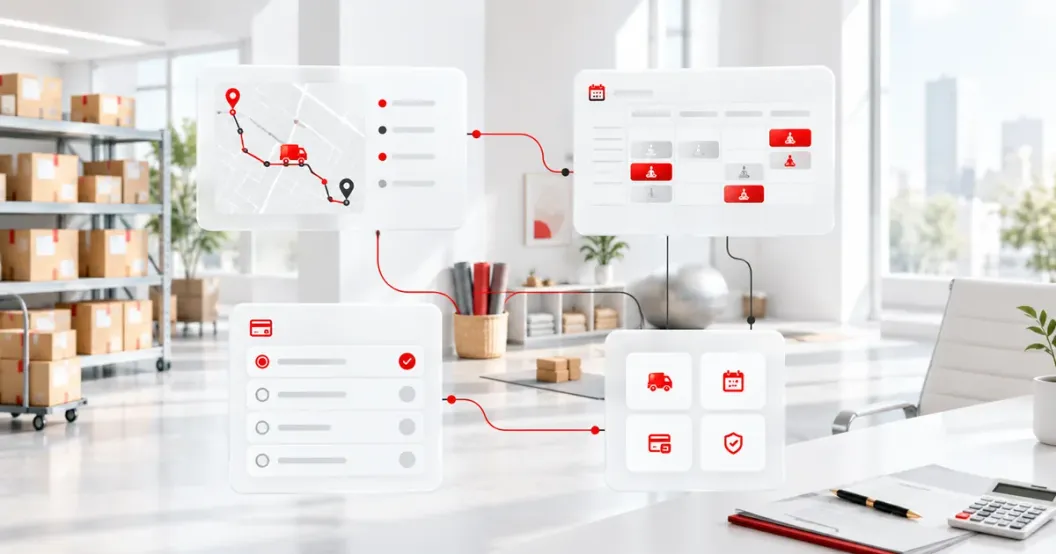
- Common custom systems fall into five types: operations management, logistics and dispatch, booking and membership, installments and billing, and internal approvals and back offices; most companies need a mix.
- Custom systems are rarely built in one go; the safer path is to launch the most painful process first and extend release by release.
- Based on JoinX's custom project pricing in Taiwan, a small single-purpose system starts at NT$150,000, a single-process system costs about NT$500,000 to 1 million, a multi-department mid-sized system about NT$1 million to 2.5 million, and larger scopes are quoted by modules and integrations.
- 欣晨快遞's logistics management system has grown to version five since 2025, 驊曖體育's yoga studio management system to version nine since 2020, and 沂平's installment system has been extended four times since 2024.
Contents
Custom system development means designing software from scratch around your own workflows, roles and rules, instead of bending your work to fit an off-the-shelf product. It is not only for large companies: if your core processes differ from your peers, Excel and chat groups can no longer keep up, and the system has to share data with what you already run, it is worth evaluating. Below we cover when to go custom, the common types, the development process, cost ranges, and three Taiwan case studies JoinX built.
When should you build a custom system, and when is packaged software enough?
If your processes look like your peers' and off-the-shelf software covers the main needs, start with a package. If your processes have their own checkpoints and exceptions, or several departments and partners must share data, custom usually pays off. Most companies use both.
| Approach | Best for | Watch out for |
|---|---|---|
| Cloud packages (SaaS) | Small teams with standard processes who want to start right away | Usually priced per user per month; processes can't change and data ends up spread across several services |
| Package plus custom add-ons | The package covers the main process but lacks a few steps, reports or integrations | Check which APIs and data exports the package offers first |
| Fully custom system | Processes that are themselves a competitive edge, such as distinctive dispatch, booking or installment rules | Requirements interviews take the most time; launch in phases, starting with the most painful process |
Ask three questions: Do staff spend much of the day moving data between spreadsheets? Does the off-the-shelf tool only work with lots of manual patching? Are you maintaining two or more manual processes at once? If two answers are yes, custom deserves a serious look. You can also use the ISO/IEC 25010 quality model's functional suitability, usability and maintainability to compare: if a package fails on the first, strengths in the other two will not make up for it.
What are the common types of custom systems?
Based on JoinX's projects, custom systems fall into five common types: operations management, logistics and dispatch, booking and membership, installments and billing, and internal approvals and back offices. Real projects usually combine several, such as a logistics system that includes both a back office and a driver app.
| Type | Common features | Typical industries |
|---|---|---|
| Operations management (ERP, inventory) | Purchasing, inventory, orders, shipping, financial reconciliation | Manufacturing, wholesale, retail, semiconductors |
| Logistics and dispatch | Job assignment, routes, delivery confirmation, driver or technician apps | Courier logistics, equipment repair, cleaning services |
| Booking and membership | Class or service booking, check-in, membership plans, discount codes | Fitness studios, classrooms, beauty and medical clinics |
| Installments and billing | Installment calculation, contract templates, collections, reconciliation | Financing, leasing, installment payment companies |
| Internal approvals and back offices | Form approvals, permission management, reports and management dashboards | Internal management in any industry |
If your needs lean toward internal management, such as leave approvals, work orders or HR, see how we approach internal business system development; if you need to plan your overall systems first, see our system development services.
What are the steps in custom system development?
It usually takes five steps: process interviews, specs and prototypes, phased development, testing and acceptance, and launch and maintenance. Each step should produce something you can check, so you never see the system for the first time at the very end.
- Process interviews (2–4 weeks). Talk with the people who do the work every day: how forms are filled in, who approves, how exceptions are handled, and which step takes the most time or goes wrong most often.
- Specs and prototypes. Turn this into a functional spec, a role and permission table, and a clickable prototype that users try before deciding what goes into version one. JoinX works with SDD (spec-driven development) plus TDD (test-driven development), so specs and tests are kept together.
- Phased development. Deliver module by module, each with a working version; migrated data is checked against the original source.
- Testing and acceptance. Accept item by item against the spec. Before handover, JoinX runs its own source code scans and vulnerability scans; when black-box penetration testing is needed, a third party performs it, JoinX can help arrange it, and we fix the findings before delivery.
- Launch and maintenance. Bugs are fixed under warranty; after that, a maintenance contract keeps the system in step with process or organizational changes.
If the system handles customer or employee personal data, access rights, retention periods and deletion should be planned at the spec stage under Taiwan's Personal Data Protection Act; for back-office permissions, it also helps to check against the "Broken Access Control" items in the OWASP Top 10.
How much does custom system development cost?
Based on JoinX's custom project pricing in Taiwan, a small single-purpose system starts at NT$150,000, a single-process system costs about NT$500,000 to 1 million, a multi-department mid-sized system about NT$1 million to 2.5 million, and larger integrated platforms are quoted by modules and integrations.
| Scale | Estimated cost | Typical scope | Typical timeline |
|---|---|---|---|
| Requirements mapping | NT$100,000–300,000 | Interview processes, define functional specs and role permissions, and produce a comparable spec | 2–4 weeks |
| Small system | From NT$150,000 | A single-purpose internal tool, such as forms, list management or simple reports | Depends on scope |
| Integrating one system | NT$50,000–200,000 per integration point | Data sync with one of ERP, payments, logistics or accounting | Depends on the other side's API |
| Simple ERP | From NT$450,000 | Core modules built around your operations first, extended release by release | Depends on scope |
| Single-process system | NT$500,000–1 million | One process for one department, such as booking, work orders or repair requests | 3–5 months |
| Mid-sized system | NT$1 million–2.5 million | Multiple departments, roles and processes, with several integrations | 5–8 months |
| Integrated platform | Quoted by scope | Several subsystems under one entry point, with data migration and phased launch | 8–18 months |
These figures are a starting point for budgeting, not a fixed quote; pricing depends on your requirements, and third-party services such as cloud hosting, SMS and e-signatures are extra. For the factors that drive a quote and the questions to ask vendors, see custom system development costs explained.
Taiwan custom system case studies: what did 欣晨快遞, 驊曖體育 and 沂平 build?
The three cases cover logistics, fitness studios and installment payments. What they share is that the process itself is a competitive edge that packaged software could not fully match, and each launched its core process first, then extended release by release.
| Case | Industry | System type | Main scope | Period and releases |
|---|---|---|---|---|
| 欣晨快遞 | Courier logistics | Logistics and dispatch | Logistics management system and driver app | Since 2025, extended to version five |
| 驊曖體育 | Yoga studios | Booking and membership | Yoga studio management system with class booking, check-in and discount codes | Since 2020, up to version nine |
| 沂平 | Installment payments | Installments and billing | Installment system: installment calculation, contract templates, collections, reconciliation | Since 2024, extended four times |
欣晨快遞: logistics management system and driver app
Starting point: 欣晨快遞, a courier company, needed a logistics management system that fit its own way of dispatching and connected back-office management with drivers' field work.
What we did: We built a logistics management back end around 欣晨快遞's operations, paired with an app for drivers. Rather than building every feature at once after version one, we extended it in phases as the business required.
Period: Development began in 2025 and has been extended to version five as operations required. See the 欣晨快遞 case study for the full story.
驊曖體育: yoga studio management system
Starting point: 驊曖體育, a yoga studio operator, needed a management system designed around how its studios run, covering class booking and studio check-in.
What we did: We built a yoga studio management system with class booking and check-in, then kept revising it as the business evolved; version seven added discount codes. JoinX also handles maintenance after launch.
Period: We have worked together since 2020, with releases up to version nine. See the 驊曖體育 case study for the full story.
沂平: installment system
Starting point: In installment payments, every installment amount, contract and collection has to be calculated correctly and reconcile, and managing that in spreadsheets invites errors.
What we did: We built an installment system for 沂平 covering installment calculation, contract templates, collections and reconciliation, so data from signing to payment flows through one system. Contracts and collections involve customers' personal data, so access is separated by role.
Period: Development began in 2024; after launch, requirements were extended four times as the business needed, and work continues in 2026.
What should you prepare before commissioning a custom system?
You do not need a full spec, but prepare five things: your most painful process, who will use the system, your existing data, the systems to integrate, and who maintains it after launch. The more concrete you are, the more accurate the quote and the faster version one ships.
- Write down your most painful process. "Jobs are assigned by phone and reconciled in Excel" is easier to estimate than "we need an ERP."
- List users and roles. Who creates data, who approves, who can only view, and which reports managers need.
- Inventory existing data. Which spreadsheets, forms or legacy systems hold it today, and whether it moves to the new system.
- List systems to integrate. ERP, accounting, payments, logistics or account systems, and whether they offer APIs.
- Agree on handover and maintenance. The contract should state source code ownership, documentation, the maintenance arrangement after launch, and how handover works if you change maintenance vendors.
Frequently Asked Questions
Is a custom system right for a small company?
It depends on your processes, not your size. If your processes resemble your peers', packaged software is cheapest; if only one process is unusual, customize just that part. A small single-purpose system starts at NT$150,000, so there is no need to build a full suite at once.
How long does custom system development take?
A single-process system takes about 3–5 months, a multi-department mid-sized system about 5–8 months, and an integrated platform with several subsystems about 8–18 months. That assumes requirements are clearly defined during interviews and do not change significantly mid-project.
Can a custom system work alongside packaged software?
Yes, and that is the most common setup. Standard parts such as accounting stay in the package or existing ERP, company-specific processes are customized, and APIs keep the data in sync. Each integration point costs about NT$50,000–200,000, depending on how open the other system is.
Who owns the source code of a custom system?
The commissioning company should. JoinX develops with its own in-house team without subcontracting, and hands over the full source code and spec documents, so you can maintain it yourself, sign a maintenance contract, or move to another team. We recommend writing source code ownership and handover into the contract.
Does a custom system cost money after launch?
Usually, yes. Business rules change and the system needs updates; hosting, backups, permissions and compatibility also need long-term care. You can sign a maintenance contract or commission changes as needed; just agree on the approach when you sign.
Sources
- ISO/IEC 25010:2023 Systems and software engineering — Product quality modelISO/IEC
- Personal Data Protection Act (Taiwan)Ministry of Justice, Taiwan
- White Paper on Small and Medium EnterprisesSmall and Medium Enterprise and Startup Administration, Ministry of Economic Affairs, Taiwan
- OWASP Top 10OWASP Foundation
These are the regulations and sources cited at the time of writing. Rules may be revised; always check the latest official announcement.
About the author
Jack Lee
Founder & CEO, JoinX
Jack founded JoinX in 2016 and leads a team of 80+ people across Taiwan and Japan. JoinX has delivered 520+ projects for 220+ clients, including 56 mid-to-large systems.
More about JackRelated articles
 How to Choose a Developer for Outsourced Financial Systems: IT Outsourcing Rules and Vendor Checks for Banks and Investment Trusts
 Admin Back-Office System Development: Modules, Permissions, Costs and Acceptance
 Education and Retail System Development Cases: CooC-Cloud, ITRI's Live Course Platform and 比漾百貨's Online Store