Custom software Software outsourcing and development Custom software built
around your business.
Apps, websites, internal systems, IoT and AI integration. One in-house team handles discovery, design, development and post-launch support. Not sure which one you need? Start with the situation closest to yours.
- projects delivered
- 520+
- mid-to-large systems launched
- 56
- project launch rate
- 96%
- clients served
- 220+
Choose this whenPeople use it on the go, or you need push notifications, location, camera or Bluetooth.
iOS and Android apps, built together with the admin back office and APIs behind them.
What we usually build:
- iOS / Android
- Cross-platform
- Members and push
- Back office and APIs
A project we delivered
漢字樹
Bilingual character-learning app
Chinese characters are broken into components drawn as characters, with stroke-order guidance and Chinese–English pairing. We handled the UI/UX design and the full build.
Read the case studyCases Real projects
Built, launched, and used every day.
Every one of these is still in use after launch. Find the one closest to yours and see what we built and how it grew.
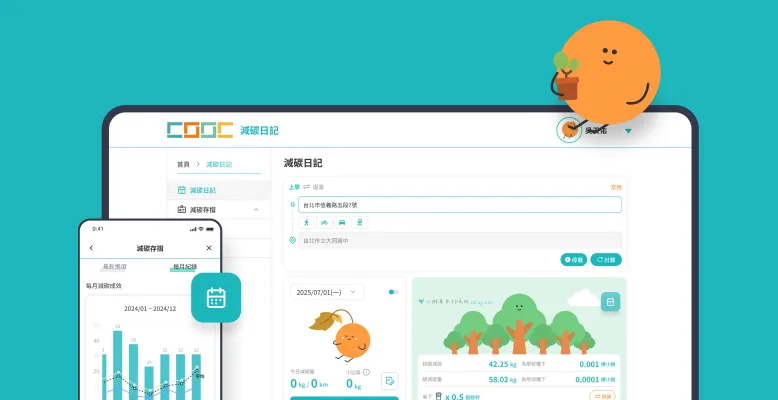
SystemTaipei City Education Bureau
Cooc: scattered school services in one portal
A single entry point serves the bureau, schools, teachers, students and parents, and keeps adding subsystems for carbon reduction, surveys and reply slips, event registration and campus payments.
- 9 subsystems
- 3+ years of partnership
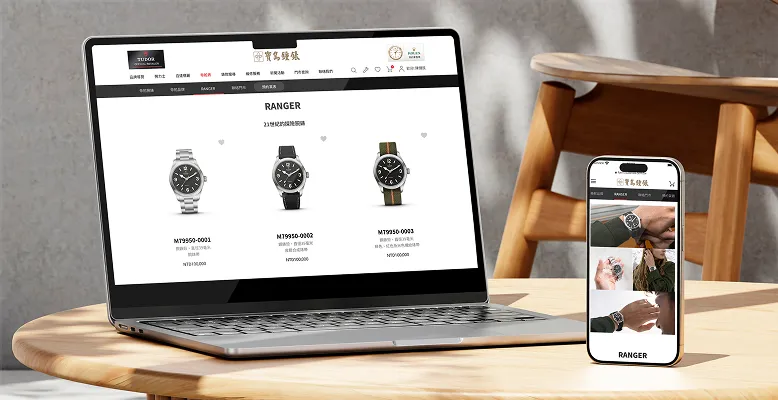
WebFormosa Watch
From a static site to luxury e-commerce
Launched in two phases: a luxury look, a modular back office and a full shopping flow. Brand sections are styled separately from the rest of the site, so yearly redesigns don't affect other pages.
- 5+ years of partnership
- 20+ feature expansions
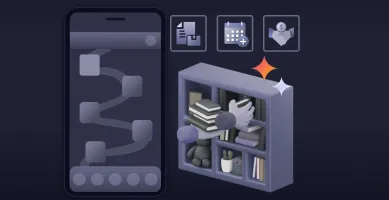
AppGUDO Talent
Back-office dispatch plus a front-line app
Dispatch and reconciliation used to be manual. Now scheduling, taking jobs, collecting payments and wage calculation all happen in one system.
- App + management platform
- 3+ years of partnership

TakeoverFundhot
Took over the old site and rebuilt it for heavy traffic
Since then we have kept building the fund and ETF indicators members care about, maintaining the forum, and using data to improve the experience.
- Takeover → rebuild
- 6+ years, ongoing

AppReligious service organization
Chanting record app and admin back office
Mantra counts, merit registration and gift records used to be compiled by hand in Excel. They now run on a cross-platform app with a central back office.
- Chanting record app
- Multilingual, online payments
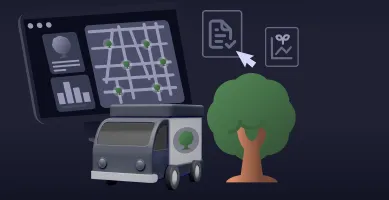
SystemLandscape engineering company
Street tree management system
A modular back office replaces paper and Excel records. Field staff work across devices and the data reaches the back office in real time.
- Paper → system
- Field work
More projects we work on
Under our confidentiality agreements, we only list the industry and what we built.
| Industry | Project | Service |
|---|---|---|
| Investment trust company | Online trading site redesign | Web |
| Bank | Digital proof-of-delivery system | System |
| Dental clinic | Clinic management system | System |
| Engineering company | Project management app and admin platform | App |
| Mitsui Cuisine (restaurant group) | Back end and system integration for a member app | App |
| Snow gear rental business | Custom rental platform | Web |
| Industry association | Association website | Web |
| Electronic test instrument maker | AI tool software | AI |
Process Process and deliverables
Five steps, each with something you can see.
App, website or system, delivery follows the same path: requirements → spec → design → phased build → acceptance → maintenance. The first two steps settle what to build and how far, before anyone writes code.
- Discovery
Pin down the problem first
We talk with the people who will use it: who they are, where they work, and how things are done today. Then we decide whether you need an app, a website, a system, or just one missing piece of an existing one.
- DeliverableCurrent workflow and issue list
- DeliverableRecommended approach
- Spec and quote
Write it down and price it clearly
We write the functional spec and role permissions and agree on what goes into version one and what comes later. The quote lists each spec item with its estimated days, and states what is out of scope.
- DeliverableFunctional spec
- DeliverableItemized quote
- Design and prototype
Walk through a prototype before coding
Designers build a clickable prototype so the people who will use it can try it first and catch workflow problems before any code is written.
- DeliverableClickable prototype
- DeliverableUI designs
- Phased build
Phased delivery, regular demos
The work is split into phases by module, and each phase ends with a version you can use. A project manager and a tech lead both review the work; development follows ISO 27001 processes, with code review and automated tests as fixed steps.
- DeliverableWorking version per phase
- DeliverableTest records
- Acceptance and support
Item-by-item acceptance, then the same team stays on
We check each item against the acceptance list agreed during the spec, and hand over the source code, deployment documents and environment settings. Issues are fixed during the warranty; after that you can sign a maintenance contract, with business-hours (5×8) or 7×12 support.
- DeliverableAcceptance checklist
- DeliverableSource code and documents
- DeliverableMaintenance contract
It doesn't need to be complete. One sentence about the problem is enough.
Pricing Pricing models and price ranges
How we price, and roughly what it costs.
Outsourced software is priced item by item from the spec. There are three pricing models, used alone or together depending on the scope.
- 01Fixed price
One total once the spec is agreed
When the scope is clear, we quote a fixed total once the functional spec and acceptance list are agreed. Nothing inside that scope is charged extra; new requests outside it are estimated separately.
- 02Phased pricing
Quoted and accepted milestone by milestone
Larger or still-evolving projects are split into phases. Each phase is quoted on its own and accepted before the next begins, and you can start with phase one only.
- 03Maintenance, separately
Post-launch support is its own agreement
After the warranty, monitoring, backups, security updates and new features are quoted separately, based on the support hours (5×8 or 7×12) and services you need.
Price ranges (custom projects in Taiwan, 2026)
| Scope | Price range | Typical content |
|---|---|---|
| Small system or add-on to an existing one | From NT$150K | A small single-purpose tool, a report, or one workflow added to a system you already have |
| Single-process internal tool | NT$500K–1M | One department and one main workflow, such as quotations, dispatch or inventory |
| Mid-sized system, several roles and workflows | NT$1M–2.5M | Several departments and role permissions, with a few system integrations |
| Complex business system or platform | Quoted by scope | Cross-department workflows, external platforms, multi-system integration and data migration |
| App | From NT$500K | iOS and Android apps with the admin back office and APIs |
| Connecting one external system | NT$50K–200K per integration point | Depends on how open the other system's API is and how complete its documents are |
The final figure comes from the itemized spec after requirement interviews. Third-party licences, cloud hosting and API usage are extra.
Compare Ways to work
Project outsourcing, staff augmentation or an in-house team?
The difference is who owns the result, how it is priced, and who maintains it afterwards. JoinX works on a project basis: we deliver against the spec, hand over the source code, and give you a single point of contact throughout. We do not provide on-site staffing or staff augmentation.
| Aspect | Project outsourcing (JoinX) | Staff augmentation | In-house team |
|---|---|---|---|
| Who owns the result | Project outsourcing (JoinX): The outsourcing team, against the spec and acceptance list | Staff augmentation: You do; the people provided follow your direction | In-house team: You do |
| How it is priced | Project outsourcing (JoinX): Fixed price or phased, estimated from the spec | Staff augmentation: By the number of people provided and the time | In-house team: Salaries, hiring and management costs |
| Project management | Project outsourcing (JoinX): The team brings its own PM, design, engineering and QA, with one point of contact | Staff augmentation: Your PM leads the people and plans the work | In-house team: You assemble PM, design, engineering and QA yourself |
| Source code and documents | Project outsourcing (JoinX): Source code, deployment documents and environment settings handed over at the end | Staff augmentation: Depends on the contract; usually kept in your environment | In-house team: Stay inside the company |
| Best for | Project outsourcing (JoinX): A clear problem to solve, delivered as a whole and maintained after launch | Staff augmentation: You already have a tech lead and only need more hands | In-house team: Software is your core product and a long-term investment |
How we work Working together
Choosing a team means choosing the next few years.
Most clients keep working with us after launch and build the next version together. These points are clear from day one.
- team members
- 80+
- in-house engineers
- 50+
- of mid-to-large clients renew or expand
- 63%
- average partnership with our top 20 clients
- 3.7 yrs
No subcontracting
Our own team builds the project from start to finish: 50+ in-house engineers, with iOS, Android, front end, back end and design in one team, and regular demos during development.
Source code and accounts are yours
At handover you get the source code, deployment documents, environment settings, and the accounts, domains and permissions we applied for on your behalf. Ownership is written into the contract.
AI-assisted, data protected
We use enterprise AI tools that, by contract, do not train models on your data. Passwords, keys and personal data never go into AI tools, and AI-generated code still goes through human review and testing.
We take over other vendors' systems
We have taken over 100+ systems built by other vendors: we review the source code and environment first, then decide whether to fix, renew or rewrite.
FAQ Common questions
Eight things people ask before we start.
I'm not sure whether I need an app, a website or a system. Where do I start?
Start from the problem: who will use it, where, and how it is done today. If people are on the go or you need push notifications, camera or Bluetooth, it is usually an app. If you need to be found in search, sell online or run a member community, it is usually a website. If you are replacing internal spreadsheets and paper, it is a system. Many projects combine them, such as a back-office system plus a front-line app, and we work this out together in the first discovery call.
How do you estimate the cost?
Based on custom projects in Taiwan in 2026: a small system or an add-on to an existing one starts from NT$150K, a single-process internal tool runs about NT$500K–1M, a mid-sized system with several roles and workflows about NT$1M–2.5M, and a complex business system or platform is quoted by scope; apps start at about NT$500K. How the figure is worked out: after the requirement interviews, we break the system into modules and individual features, each with a spec description and estimated days. Anything outside this scope is also written on the quote. The clearer the scope, the more accurate the estimate, so we do discovery and the spec first, then quote.
How is outsourced software priced? Fixed price or in phases?
Both, depending on the scope. When the scope is clear, we quote a fixed total once the functional spec and acceptance list are agreed, and nothing inside that scope is charged extra. Larger or still-evolving projects are split into phases, each quoted on its own and accepted before the next begins. Post-launch maintenance is a separate agreement based on support hours and services.
Can you place engineers on-site at our office?
We do not provide on-site staffing or staff augmentation. We work on a project basis: our team builds to the spec and is responsible for the result, and you deal with a single point of contact. When needed, our PM and engineers can visit your office regularly to confirm requirements directly with the people who will use the system, and we demo progress regularly during development.
Should we use an off-the-shelf SaaS or build custom?
If your process is standard and similar to others in your industry, an off-the-shelf SaaS is usually faster and cheaper. Custom work pays off when the process itself is your competitive edge, or when it must integrate deeply with existing systems. We can also add features or reports to what you already have instead of rebuilding everything.
Do you subcontract? Who owns the source code?
We don't subcontract; our own team is responsible from start to finish. At handover you get the source code, deployment documents, environment settings, and the accounts, domains and permissions we applied for on your behalf. Ownership of deliverables and intellectual property is written into the contract, and third-party packages and open-source software follow their own licenses.
You develop with AI. Is my data safe?
When we use AI to assist development, code is processed in enterprise-grade AI tools that have passed a security assessment, and by contract these services do not train models on your data. Sensitive content such as passwords, keys and personal data is never put into AI tools. AI-generated code still goes through human review and testing, and our team remains responsible for the final delivery.
Who maintains it after launch? Can you take over a system that's already running?
The same team. Issues are fixed during the warranty; after that you can sign a maintenance contract with business-hours (5×8) or 7×12 support, covering monitoring, backups, security updates and new features. We have also taken over 100+ systems built by other vendors, starting with a review of the source code and environment before deciding whether to fix, renew or rewrite.
Get started Tell us what you need
Your next system starts with your problem.
You don't need a finished spec to start. In the first call we cover three things:
- 1The problem to solve
- Your most time-consuming work, who uses it, and the outcome you want to improve.
- 2Systems and data
- Tools to integrate, data sources, permissions, and whether AI could help.
- 3Budget and release order
- We estimate cost from functionality and integration complexity, separate launch essentials from later additions, and plan timing together once requirements are confirmed.