Technology Insights
How to Develop a Logistics App: Driver, Shipper and Back-Office Features, Cost and Timeline (2026)
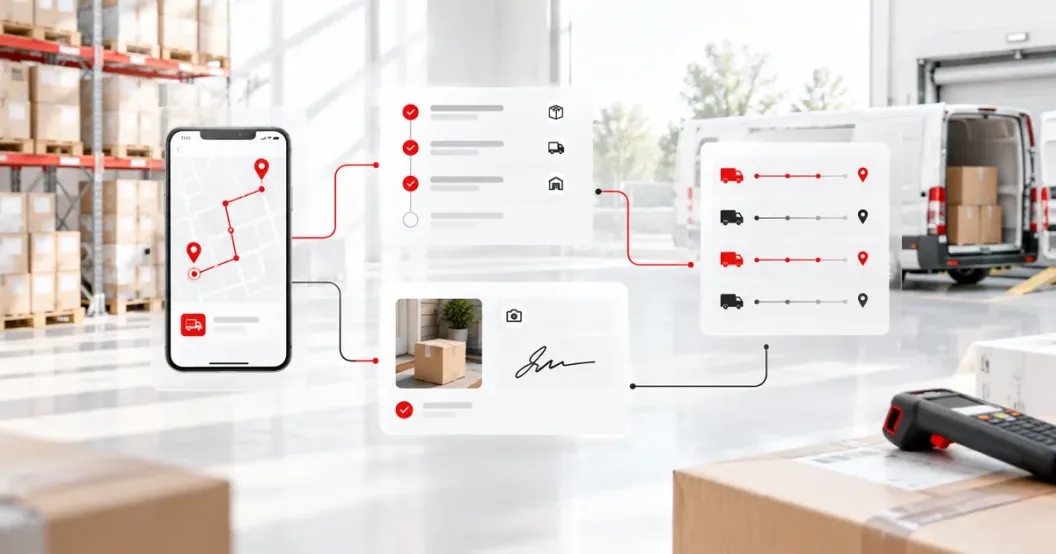
A logistics app usually has three sides: an app for drivers, a portal where shippers place and track orders, and a back office for dispatchers. The first version should get one flow working end to end, from dispatch to driver updates, proof of delivery and customer service lookups, and then grow release by release as operations require. A driver app with a management back office usually falls in the feature-app tier, about NT$1.2–3 million over 3–6 months; adding a single driver reporting app next to an existing system starts at NT$150,000. This article covers the features each side needs, cost and timeline, development steps, and how JoinX approaches logistics projects.
Key takeaways
- A logistics app usually has three sides, a driver app, a shipper portal and a dispatch back office, all reading and writing the same delivery order.
- The core of a driver app is today's tasks, status updates, electronic proof of delivery and exception reports, with steps short enough to finish one-handed.
- For shippers, a web page or LINE tracking is usually enough at first; build an app when order and tracking volume is high and push notifications are needed.
- A driver app with a management back office costs about NT$1.2–3 million over 3–6 months; adding only a driver reporting app to an existing system starts at NT$150,000.
- 欣晨快遞's logistics management system and driver app have been in development since 2025 and extended in phases to version five as operations required.
Contents
A logistics app is not just an app for drivers. It is a system where drivers, shippers and dispatchers share the same delivery order. When developing one, get dispatch, driver updates, proof of delivery and customer service lookups working first, then add other features release by release as operations require.
This article looks at how to develop a logistics app: what each side needs, how to estimate cost and timeline, and how to phase the work. If you are still deciding whether to buy an off-the-shelf WMS or TMS or build your own, start with how to choose a logistics management system, then come back here once you have decided to build.
Which sides does a logistics app need?
Usually three: an app for drivers, a portal where shippers place and track orders, and a back office shared by dispatch, customer service and finance. All three look at the same delivery order; each role just sees and edits different fields.
| Side | Who uses it | Main work | Common form |
|---|---|---|---|
| Driver side | In-house drivers, partner carriers | View today's tasks, update status, capture signatures and photos, report exceptions | Native or cross-platform app |
| Shipper side | Businesses or individuals sending goods | Place or import orders, track shipments, download delivery records, view statements | Web or LINE; an app once volume is high |
| Dispatch back office | Dispatch, customer service, finance, managers | Assign and reassign, handle exceptions, price and reconcile, view reports | Web back office |
The data on all three sides should be organized around the delivery order: the shipper creates the order, dispatch assigns it to a driver, the driver's proof of delivery and exceptions are written back to the same order, and customer service and finance look up and bill from that same order. As soon as one side keeps its own spreadsheet, tracking a shipment means calling someone again.
What features does a driver app need?
The core of a driver app is four things: today's tasks, status updates, electronic proof of delivery and exception reports. The design rule is one-handed operation with as little typing as possible, because drivers use their phones between loading goods and parking.
| Feature | Why it is needed | In the first version? |
|---|---|---|
| Today's tasks and stop order | Drivers see which stops to run as soon as they open the app | Yes |
| Status updates (picked up, out for delivery, delivered) | Customer service does not need to call to ask where the goods are | Yes |
| Electronic proof of delivery and photos | The delivery record is tied directly to the order, with no paperwork to sort back at the depot | Yes |
| Exception reports (refused, short, damaged, no one home) | Partially completed deliveries still record the accepted quantity and reason | Yes |
| Open navigation | Hand off to an existing map app instead of building maps | Recommended |
| Offline storage and resend | No lost data in basements or on remote roads with weak signal | Depends on routes |
| Location reporting | Lets dispatch see roughly where vehicles are | Optional; handle permissions and battery use |
| Goods handover | Records who handed what to whom, and how much, during reassignment or transfer | Only if you have transfer flows |
Location reporting needs particular planning. When an app keeps collecting location in the background, Google Play requires developers to explain the purpose and pass a review, and Apple's review guidelines also require telling users clearly why location is needed. Many logistics companies only need to record the location when a driver updates a status, not round-the-clock tracking, which keeps review, battery use and driver acceptance simpler.
Driver locations, recipient names, addresses, phone numbers and delivery photos are all personal data, so back-office access, retention periods and deletion should be planned under Taiwan's Personal Data Protection Act; for example, drivers from partner carriers see only the orders assigned to them.
Should the shipper side be an app or a website?
In most cases, a website or LINE tracking is enough to start. Shippers use the system less often than drivers, and a website needs no download or store review; build an app once order volume is high and push notifications are needed.
Common shipper-side features:
- Place orders online, or import them in bulk from an Excel template.
- Look up delivery status, delivery photos and exception reasons by order number.
- Download delivery records and monthly statements.
- Multiple accounts with permissions, for example each branch sees only its own orders.
If shippers are businesses with their own ERP or e-commerce platform, it is better to offer an API so their system can create and track orders directly, rather than asking them to log in to your website. The shipper side then shifts from screens to integration documentation and a test environment.
What features does the dispatch back office need?
The dispatch back office sends orders out, brings exceptions back and gets the money right. Its features fall into dispatch, exception handling, pricing and reconciliation, and administration; the first version should cover dispatch and exceptions, while pricing can start as an Excel export for finance.
| Area | Main content | First-version advice |
|---|---|---|
| Dispatch and reassignment | Order import, assignment to drivers or partner carriers by area and time window, reassignment history | Required |
| Exception handling | Notifications and follow-up for refusals, shortages and damage; redelivery tasks linked to the original order | Required |
| Pricing and reconciliation | Contract-based pricing, statements, billing status | Excel export is fine at first |
| Driver and vehicle management | Driver records, shifts, vehicle records | Depends on fleet size |
| Reports | Daily delivery volume, exception rate, completions per driver | Start with the two or three most used |
| Permissions | Dispatch, customer service, finance and partner carriers each see their own data | Required |
Dispatch rules are the easiest part to underestimate. Within the same area you may also need to consider delivery windows, vehicle types and the routes drivers know; in the first version, have the system list orders waiting for dispatch and let dispatchers confirm, then consider automatic dispatch once the rules are stable. For how we plan dispatch and routing, see logistics system development.
How much does logistics app development cost, and how long does it take?
Based on JoinX's figures for outsourced app development in Taiwan, a driver app with a management back office is usually a feature app, about NT$1.2–3 million over 3–6 months; adding only a driver reporting app next to an existing system starts at NT$150,000; a full three-sided platform with several integrations is quoted by scope.
| Scope | Typical content | Estimated cost | Typical timeline |
|---|---|---|---|
| Single-function driver app | Task list, status updates and proof of delivery only, written back to an existing system | From NT$150,000 | Depends on features |
| First-version validation (MVP) | Driver app plus a lean back office, running one delivery flow end to end | About NT$500,000–1.2 million | 6–12 weeks |
| Driver app plus management back office | Dispatch, reassignment, proof of delivery, exception handling, permissions, reports | About NT$1.2–3 million | 3–6 months |
| Three-sided platform | Adds the shipper side, pricing and reconciliation, and several system integrations | Quoted by scope | Launched in phases by scope |
Three factors move the price most: the number of existing systems to integrate (ERP, e-commerce platform, GPS telematics, each integration point about NT$50,000–200,000), whether offline mode and background location are needed, and whether the driver app is native or cross-platform. Also budget for the Apple developer account at US$99 a year, the one-time US$25 Google Play registration fee, and maintenance after launch. For app pricing tiers and maintenance costs, see app development cost.
These figures are a starting point for budgeting, not a fixed quote; actual pricing depends on your requirements.
How should logistics app development be phased?
Get one representative delivery flow working first, then widen the scope. Below is the order JoinX follows when planning a logistics app, checking each step against real dispatch sheets and delivery slips rather than an idealized process.
- Ride along with a driver. Note how each stop actually hands over goods and where things get stuck, and cut the driver app's steps to a minimum.
- Map the delivery order's statuses. From creation, dispatch, pickup and out for delivery to delivered, partial delivery, returned and redelivery, define who changes each status and who is notified.
- Give drivers a prototype to try. Let drivers tap through clickable screens first, and write code only once they find it easy.
- Build the first version. Include only what is needed to run one delivery flow: dispatch, driver updates, proof of delivery, exceptions and customer service lookups.
- Pilot on fixed routes. Start with drivers who know the process, and test normal deliveries as well as refusals, shortages and reassignments.
- Extend release by release as operations require. Once the first version is stable, add the shipper side, pricing and reconciliation, reports or system integrations in turn.
Our development process uses SDD + TDD: write the specification clearly first, then use tests to confirm every status change matches it. Before delivery, JoinX completes source code scanning and vulnerability scanning (white-box) itself; if black-box testing is needed, it is performed by a third party, and JoinX can help arrange it, recommend vendors, and fix the findings before delivery.
What logistics apps and systems has JoinX built?
JoinX has built a logistics management system and driver app for a courier company, and a dispatch system for a logistics company. Both were designed around the company's own operations rather than adapted from an off-the-shelf product.
欣晨快遞: logistics management system and driver app
Starting point: 欣晨快遞, a courier company, needed a logistics management system that fit its own operations and connected back-office management with drivers' field work in one system.
What we did: We developed the logistics management system, paired with an app for drivers. Rather than building every feature at once after the first version launched, we extended it in phases as operations required.
How long: Development began in 2025, and the system has since been extended to version five. See the 欣晨快遞 case study for the full story.
Logistics company: dispatch system
Approach: From 2020 to 2023 we developed a dispatch system for a logistics company. Under the confidentiality agreement, only the industry and system type are disclosed.
Frequently Asked Questions
Should the driver app be native or cross-platform?
It depends on drivers' devices and the phone features you need. When drivers use their own phones and both iOS and Android are common, cross-platform supports both from one codebase; when you need heavy background location, Bluetooth scanners or long offline periods, native development gives better control over battery use and stability.
Does the shipper side have to be an app?
No. Shippers usually do not track shipments often, so a website or LINE tracking covers most needs without going through store review. Build an app or offer an API when order volume is high, push notifications are needed, or shippers have their own systems that should create orders directly.
How long does it take to develop a logistics app?
A first version of a driver app with a management back office commonly takes 3–6 months; a validation version that runs one delivery flow takes about 6–12 weeks. After that, it grows release by release as operations require; for example, 欣晨快遞's logistics management system and driver app have been in development since 2025 and extended in phases to version five.
We already have a logistics system. Can we build only the driver app?
Yes. If your existing system's dispatch features are good enough and only driver updates and proof of delivery still rely on paper or chat groups, you can build just the driver app and write status and delivery records back to the existing system, starting at NT$150,000. Whether data can be written back depends on the existing system's API or data exchange options, which should be checked first.
What ongoing costs come after a logistics app launches?
Mainly maintenance, servers and store accounts. Maintenance is usually a proportion of the development cost each year and covers bug fixes, updates for new iOS and Android releases, and process adjustments as operations change; the Apple developer account costs US$99 a year, and Google Play registration is a one-time US$25.
Sources
- Personal Data Protection ActMinistry of Justice, Taiwan
- Google Play Developer Policy: Location PermissionsGoogle
- App Store Review GuidelinesApple
- Apple Developer Program enrollmentApple
- Play Console developer registration feeGoogle
These are the regulations and sources cited at the time of writing. Rules may be revised; always check the latest official announcement.
About the author
Jack Lee
Founder & CEO, JoinX
Jack founded JoinX in 2016 and leads a team of 80+ people across Taiwan and Japan. JoinX has delivered 520+ projects for 220+ clients, including 56 mid-to-large systems.
More about JackRelated articles
 How to Plan a Dispatch System: Development Priorities for Equipment Repair, Engineering Services, and Field Work
 How to Choose a POS System: Packaged, Cloud and Custom POS Compared, with Hardware, Integration and Cost (2026)
 How to Adopt AI Voice Customer Service: Voice Agent Architecture, Use Cases, Vendor Evaluation and Cost