Technology Insights
How to Adopt AI Voice Customer Service: Voice Agent Architecture, Use Cases, Vendor Evaluation and Cost
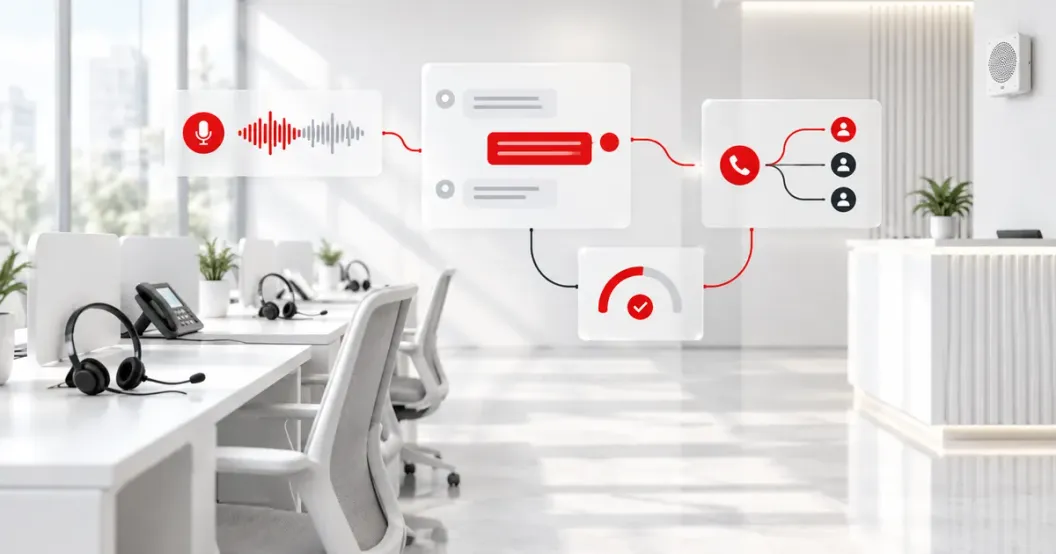
AI voice customer service (a voice agent) lets AI answer the phone, understand what the caller wants and reply by voice, handing anything it cannot answer, or anything that carries responsibility, to a person. It suits calls that are repetitive, high-volume and have clearly documented answers, such as status checks, business information and booking changes; complaints, refunds and transactions that require identity verification should stay with people. This article explains the two voice agent architectures, what to confirm before adoption, how to evaluate vendors and what makes up the cost.
Key takeaways
- AI voice customer service has four parts: speech recognition, AI answering, speech synthesis and phone system integration; the hard part is usually phone integration and human handoff, not the model.
- Calls that suit AI are repetitive, high-volume and have clear answers; complaints, refunds and transactions that require identity checks should go straight to a person.
- Voice adds two acceptance metrics beyond text: response latency and mishearing rate, so a PoC must be tested with real call recordings, not just text questions.
- Call recordings and transcripts are personal data: callers must be informed before collection, retention needs a time limit, and you must decide where the data is stored.
- The cost stages match text-based AI customer service, plus voice API usage and phone system integration; the first stage should cover only one call route.
Contents
Whether AI voice customer service works depends on three things: whether the calls are repetitive enough, whether your phone system can be connected, and whether the handoff to a person has been designed in advance. Models already understand most spoken Chinese; what usually stalls a project is phone integration, latency and accountability. Below, in the order of adoption, we cover architecture, use cases, evaluation and cost.
What is AI voice customer service (a voice agent)?
AI voice customer service is a system where AI answers the phone, understands the caller's question and replies by voice from company data, handing anything it cannot answer, or anything that carries responsibility, to a person. Unlike a traditional phone menu, callers simply say what they need.
A traditional phone menu makes callers follow its options, and with many options they easily press the wrong key and end up back at the start. AI voice customer service first works out what the caller wants, then answers from the knowledge base or transfers the call to a person along with the information already collected, so the agent does not have to ask everything again.
Compared with text-based AI customer service, voice adds two constraints: answers must be fast, or the caller will think the line has dropped; and answers must be short, because a listener cannot scroll back. Both affect the architecture and how it is accepted.
What architectures are there for AI voice customer service?
There are two common architectures: a three-step chain of speech to text, AI answer and text to speech, or a realtime voice model that takes and produces speech directly. The first lets each step be replaced and inspected; the second has lower latency and sounds more natural.
| Comparison | Three-step chain | Realtime voice model |
|---|---|---|
| How it works | Speech recognition turns speech into text, AI answers from the knowledge base, then speech is synthesized | The model listens to and speaks voice directly |
| Latency | The three steps add up, so pauses are more noticeable | Lower, so the conversation flows better |
| Inspectability | Every step leaves a text record, so it is easy to tell a mishearing from a wrong answer | Transcripts must be stored separately, and debugging is harder |
| Flexibility | Recognition, model and speech synthesis can each be swapped to another vendor | Tied to models that support realtime voice |
| Suits | Cases where auditing matters and you need to find which step failed | Cases where conversation quality matters and questions are simple |
Both architectures must also connect to the phone system, meaning the company's existing switchboard, contact center system or cloud phone service. Microsoft's Azure AI Speech provides speech to text and text to speech, and OpenAI's Realtime API provides low-latency voice conversation; which to choose depends on your requirements for latency, auditing and data storage.
Which calls are suitable for AI voice customer service?
Suitable calls are repetitive, high-volume and have clear answers, such as status checks, opening hours, booking changes and explanations of common rules. Calls that need human judgment, carry legal or financial responsibility, or come from upset callers should go straight to a person.
| Call type | Recommended approach | Reason |
|---|---|---|
| Opening hours, locations, rules | Let AI answer | The answers are fixed and can be answered once written down |
| Order, repair or application status | AI answers, read-only at first | Requires integration with existing systems; changes stay manual |
| Booking, rescheduling, cancellation | AI handles it, then the system or a person confirms | Involves slots and capacity, so duplicates and mistaken deletions must be prevented |
| Transactions that require identity checks | Transfer to a person | Identity verification and accountability must rest with a person |
| Complaints, refunds, billing disputes | Transfer to a person directly | These need judgment and reassurance; an AI answer can make things worse |
The way to decide is simple: sort the past three months of calls by question, see what share the top categories account for, and check whether their answers exist in documents or systems. Categories with findable answers and repetitive phrasing are the candidates for the first stage.
What should you confirm before adopting AI voice customer service?
The three most important things are whether the phone system can hand calls to AI, whether the earlier conversation travels with the call when it is transferred to a person, and how recordings and transcripts are kept. Without these, even a good PoC cannot go live.
- Confirm how the phone system connects. Ask whether your existing switchboard or contact center system can route calls to an external service and which protocols it supports; cloud phone services are usually easier to connect than traditional switchboards.
- Design the conditions and flow for human handoff. Decide which keywords, which emotions and how many failed attempts trigger a transfer, and what information the agent sees when the call arrives.
- Organize the knowledge base. Rewrite answers to common questions so they work when heard: short sentences, the conclusion first, numbers and dates stated clearly.
- Decide how recordings and transcripts are handled. Under Taiwan's Personal Data Protection Act, you must state the purpose before collecting personal data; the call should open by saying it is recorded and uses AI, and the retention period and storage location must be set in advance.
- Set acceptance metrics. Beyond accuracy, measure response latency, mishearing rate and handoff rate, and test with real call recordings rather than text questions alone.
NIST's AI Risk Management Framework lists continuous monitoring after launch as a governance priority. Once voice customer service is live, sample calls regularly, review wrong answers and handoffs, and feed the findings back into the knowledge base.
How do you evaluate AI voice customer service vendors?
What matters is not how smooth the demo is, but whether the vendor can connect to your phone system and existing data, explain how latency and mishearing are measured, and say where the data is stored. Demo questions are hand-picked, so test with your own real calls.
| Evaluation item | Questions to ask |
|---|---|
| Phone integration | Can it connect to our existing switchboard or contact center system? What information is passed along on handoff? |
| Knowledge and system integration | Which documents are answers based on? Can it look up orders, bookings and other systems? How are read and write permissions separated? |
| Acceptance | What data is used for testing? How are accuracy, response latency, mishearing rate and handoff rate measured? |
| Data handling | Where are recordings and transcripts stored? For how long? Will they be used to train models? |
| Maintenance after launch | Who updates the knowledge base? How often are wrongly answered calls reviewed? Who retests after a model update? |
| Deliverables | Who owns the source code, configuration and documentation? Can we later replace just the voice or model vendor? |
Options on the market fall into two broad types: platform services, which work once you activate them and set up a knowledge base, billed per call minute or per resolution; and custom integration, developed around the company's phone system and existing systems. Platforms are faster when questions are simple and no internal data is needed; custom integration fits better when you need to look up order or member data, or data cannot leave a designated environment. The choice works the same way as for text-based AI customer service; see the comparison in AI customer service cost.
How is the cost of AI voice customer service calculated?
The stages of a custom deployment match text-based AI customer service: a free requirements review, a single-use-case PoC about NT$300,000 to 800,000, and a production launch about NT$800,000 to 2.5 million. Voice adds phone system integration plus usage fees for speech recognition, speech synthesis or a realtime voice model.
| Cost item | Billing | What drives the amount |
|---|---|---|
| Requirements review, PoC, production launch | Requirements review free, then billed by stage, same ranges as the AI customer service page | Number of call types, difficulty of organizing the knowledge base, systems to integrate |
| Phone system integration | Quoted by scope | How open the existing switchboard or contact center system is, and the handoff design |
| Voice and AI model API | By usage (call minutes or volume) | Monthly calls, average call length, chosen architecture |
| Cloud telephony and hosting | By usage and specification | Concurrent calls, recording storage, whether private deployment is needed |
| Maintenance | Separate contract | How often the knowledge base is updated, call sampling and reporting needs |
The most effective way to control the budget is to open only one call route in the first stage, for example only "status check" calls, with all other calls still answered by people. Once accuracy, latency and handoff rate all meet their targets, expand to other question types.
What AI conversation and voice projects has JoinX built?
JoinX's public projects in this area include an AI agent conversational interface for an insurance company, an AI voice generation platform for Linking Digital, and JoinX GPT on our website. What they share is a design built on existing data and workflows, with AI handling lookups and summaries and people keeping the decisions that carry responsibility.
- Insurance company: In 2026 we designed and built the conversational interface and workflow of an AI agent for insurance sales, following frontline staff's working order so AI helps look up and organize data, with a person confirming at the end. See the insurance company AI agent case study.
- Linking Digital: We designed the full pipeline from manuscript upload, text segmentation, character recognition, emotion analysis and voice tagging to speech synthesis, turning e-books into audio content with distinct characters. See the Linking Digital case study.
- JoinX GPT: The AI assistant at the bottom right of joinx.co answers questions from the website's services, process and articles, and hands anything it cannot answer to sales.
Voice customer service has to connect to phone systems and existing data, which adds integration and acceptance work beyond text conversation. JoinX starts by mapping call types and the phone system, then runs a PoC on one call route and expands only after the numbers meet their targets.
Frequently Asked Questions
How is AI voice customer service different from a traditional phone menu (IVR)?
A traditional phone menu makes callers follow keypad options, while AI voice customer service lets callers simply speak, and the AI answers or transfers once it understands the question. Many companies keep their existing menu and hand only a few options to AI, replacing it step by step.
Can AI voice customer service understand Taiwanese Hokkien or accents?
Mainstream speech recognition is quite mature for Mandarin, but results for Taiwanese Hokkien and mixed-language speech vary widely, and you only know after testing with your own real call recordings. If callers often speak Taiwanese Hokkien, include those calls in the PoC test set, and keep categories with high mishearing rates with people for now.
Will AI voice customer service replace customer service staff?
The more common outcome is a change in division of labor: AI handles repetitive inquiries, and staff handle complaints, refunds and calls that need judgment. When calls are transferred with the earlier conversation attached, staff do not have to start over.
What regulations apply when AI processes call recordings?
Call recordings and transcripts are personal data. Under Taiwan's Personal Data Protection Act, you must state the purpose before collection, and use must stay within that purpose. In practice, calls open by stating they are recorded and use AI, retention periods are set, and you confirm the voice service vendor will not use the data to train models. Industries such as finance and healthcare must also check their regulators' rules.
How long does it take to launch AI voice customer service?
Based on JoinX's AI customer service stages, the requirements review takes 1–2 meetings, a single-use-case PoC about 4 to 8 weeks, and a production launch about 2 to 4 months. The timeline of a voice project mainly depends on how difficult the phone system integration is and how many existing systems must be connected.
Sources
- Personal Data Protection ActMinistry of Justice, Taiwan (Laws & Regulations Database)
- Azure AI Speech documentation (speech to text, text to speech)Microsoft
- Realtime API documentationOpenAI
- AI Risk Management Framework (AI RMF 1.0, 2023)National Institute of Standards and Technology (NIST)
These are the regulations and sources cited at the time of writing. Rules may be revised; always check the latest official announcement.
About the author
Jack Lee
Founder & CEO, JoinX
Jack founded JoinX in 2016 and leads a team of 80+ people across Taiwan and Japan. JoinX has delivered 520+ projects for 220+ clients, including 56 mid-to-large systems.
More about Jack