Technology Insights
How to Approach IoT System Integration: Roles, Acceptance and Costs Across the Device, Gateway, Cloud and App Layers
When hardware makers connect their devices to an app and the cloud, problems rarely come from one layer being built badly. They come from nobody owning the interfaces between the device, gateway, cloud and app layers. This article uses the four-layer architecture to explain who usually owns each layer, how to divide responsibility for the interface documents between layers, how to run acceptance testing for each layer, and how to break down the costs, with device app cases JoinX has built.
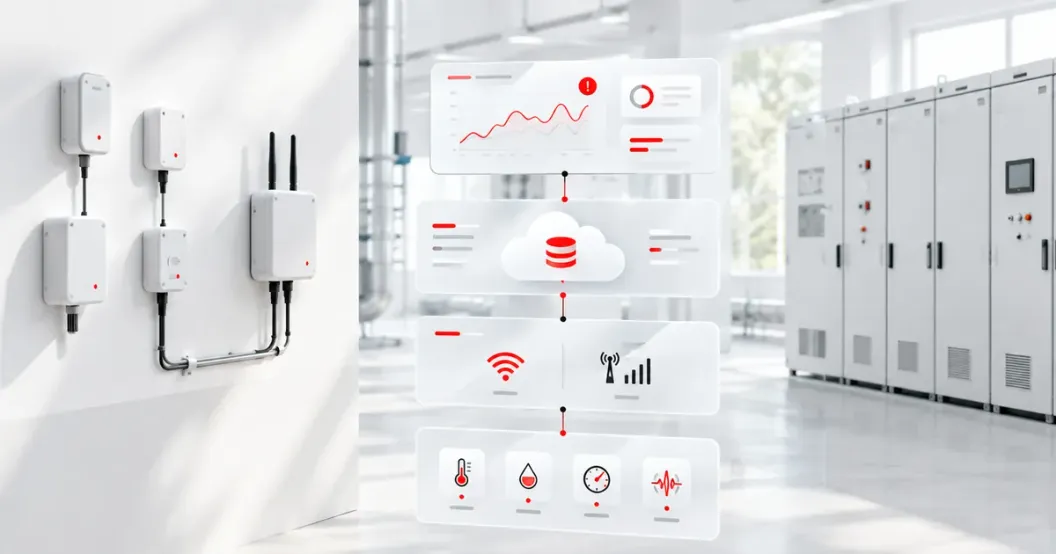
Key takeaways
- An IoT system can be split into four layers, device, gateway, cloud and app, and each layer needs a clear owner and clear deliverables.
- Most problems happen at the interfaces between layers, so each communication protocol, data format and API document should have one side as author and the other as approver.
- Not every product needs a separate gateway: the phone often acts as the gateway for Bluetooth devices, and Wi-Fi devices can connect to the cloud directly.
- Run acceptance tests layer by layer, then cross-layer integration tests such as reconnecting after a network outage, retrying failed OTA updates, and pairing after iOS and Android upgrades.
- Estimate costs by layer: firmware is handled by the hardware team or quoted separately, the app and cloud back end cost about NT$500,000 to 3 million at JoinX's rates, and cloud hosting is billed by usage.
Contents
When hardware makers connect devices to an app and the cloud, the key to integration is not how well any one layer is built but whether someone owns the interfaces between the four layers. The device, gateway, cloud and app are often built by different teams; each layer passes its own tests, and only when they are connected do commands fail to match and data formats differ. Below we use the four-layer architecture to explain roles, acceptance and costs.
If you are still preparing requirements for outsourcing a device app, start with Device App Development: 6 Things Hardware Makers Should Prepare Before Outsourcing; this article continues with how to divide the work when integrating the four layers.
What is the four-layer architecture of an IoT system?
The four layers are device, gateway, cloud and app. The device senses and acts, the gateway converts protocols and forwards data, the cloud handles accounts, data and remote control, and the app is the interface users operate.
| Layer | What it does | Usual owner | Main deliverables |
|---|---|---|---|
| Device | Sensing, control, firmware, wireless connectivity | The hardware maker's firmware team | Firmware, communication protocol document, radio certification |
| Gateway | Protocol conversion, offline buffering, forwarding to the cloud | The hardware maker, or the phone app doubling as the gateway | Gateway firmware or software, forwarding rules |
| Cloud | Device registration and binding, data storage, remote control, OTA delivery, admin back office | The software development team | Cloud services, API documentation, admin back office |
| App | Pairing, control, status display, push notifications, app store release | The software development team | iOS and Android apps, app store account setup |
Devices sold in Taiwan that use Bluetooth, Wi-Fi or other radio frequencies must also comply with the NCC's Low-power Radio-frequency Devices Technical Regulations. This belongs to the device layer and is the hardware team's responsibility.
Who owns the interface documents between layers?
Each interface needs one side as author and the other as approver. There are three main interfaces among the four layers: device and app, device and cloud, and cloud and app. If any of them is unclear, integration turns into rounds of rework.
| Interface | What it must define | Suggested author | Approver |
|---|---|---|---|
| Device ↔ App | Pairing flow, command and response formats, error codes | Firmware team | App team |
| Device (or gateway) ↔ Cloud | Connection method, message topics and data formats, OTA flow | Both sides, written by the integrator | Hardware maker |
| Cloud ↔ App | API specification, accounts and permissions, push notification rules | Cloud team | App team |
Devices commonly connect to the cloud over MQTT, and the OASIS MQTT 5.0 standard defines the message format for publishing and subscribing. But the standard does not decide how topics are named or how data fields are defined; those must go into the interface document both sides sign off on.
Does every product need a gateway?
Not necessarily. The phone app often doubles as the gateway for Bluetooth devices, forwarding data to the cloud, and Wi-Fi devices can connect to the cloud directly. A separate gateway device is needed only when a site has many low-power sensors.
The most overlooked part of the gateway layer is what happens when the connection drops: whether data is buffered during an outage, how it is resent after recovery, and how duplicates are handled. When the phone acts as the gateway, this logic lives in the app, and the app's development scope grows accordingly.
What must the cloud and app layers handle?
The cloud handles device registration and account binding, data storage, remote control, OTA delivery, and an admin back office for support and sales staff; the app handles pairing, control, status display, push notifications and store release. Both are usually built by the same software team so the APIs stay aligned.
Security requirements also fall on these two layers and the device. ETSI EN 303 645, the security baseline for consumer IoT, requires no universal default passwords, secure software updates and encrypted communication; NIST's NISTIR 8259A lists the security capabilities a device should have, such as device identification and software updates.
Writing these requirements into the specification as acceptance items for each layer keeps integration from becoming a case of everyone assuming someone else would do it.
How do you run acceptance testing for four-layer integration?
Accept each layer first, then run cross-layer integration tests. Test every layer against the interface documents, then connect the whole flow on real hardware, and finally verify on phones of different brands and OS versions.
- Device layer: Test the response and error codes of every command in the communication protocol document, and confirm the radio certification schedule.
- Gateway layer: Unplug and reconnect the network, and confirm data is buffered, resent and not duplicated.
- Cloud layer: Test account binding and unbinding, remote control response time, staged OTA delivery and retries on failure, and confirm the back office shows each device's firmware version.
- App layer: Test pairing, control and push notifications on the agreed list of phone models, and pass App Store and Google Play review.
- Cross-layer integration: Simulate real situations, such as a device losing power and restarting, an OTA update interrupted halfway, or a user logging in again on a new phone.
Acceptance criteria should be written into the contract before development, not debated during testing. Before delivery, JoinX runs its own source code scans and vulnerability scans. When black-box testing is needed, it is done by a third party; we can help with contacts and vendor recommendations, and we fix the findings before delivery.
How are IoT system integration costs calculated?
Estimate them by layer. Device firmware is handled by the hardware team or quoted separately. For the app and cloud back end, based on JoinX's custom project pricing in Taiwan, a single-device control app costs about NT$500,000 to 1.2 million, and a feature-rich version with cloud, push notifications and OTA about NT$1.2 million to 3 million.
| Scope | Cost range | Typical content | Timeline |
|---|---|---|---|
| Requirements and protocol review | NT$100k–300k | Review of devices, communication protocols and data flows, producing a comparable spec | 2–4 weeks |
| Single-device control app | NT$500k–1.2M | Pairing, control and status display, with a simple back office | 6–12 weeks |
| Feature-rich | NT$1.2M–3M | Accounts and multiple devices, cloud back end, push notifications, OTA | 3–6 months |
| Platform | Priced by requirements | Multi-brand versions, large device fleets, data analytics or AI | 6+ months |
Like device firmware, gateway firmware is handled by the hardware team or quoted separately; cloud hosting, push notifications and app store account fees are billed by actual usage; post-launch maintenance is a separate agreement. See IoT app development for the full scope of services.
Which parts of four-layer integration does JoinX handle?
JoinX handles the app and cloud back end, while firmware stays with the hardware maker or its existing firmware vendor. Early in development we confirm the communication protocol, command formats and error codes with the firmware team, and we test together on real hardware throughout.
HVAC and ventilation equipment maker: Ventilation system app and admin back office
Approach: Since 2025 we have built the app for an HVAC and ventilation equipment maker's clean-air ventilation system, then extended it with an admin back office and APIs, plus a separate app version for a partner brand and yearly maintenance.
Electronic instrument company: Measuring instrument Android app and web version
Approach: Since 2024 we have built the Android app for a measuring instrument, later adding web version features and UI/UX improvements.
Coffee machine company: Coffee machine control app
Approach: Since 2026 we have built a mobile app for operating coffee machines, with features added after launch.
Under confidentiality agreements, these cases are described by industry.
Frequently Asked Questions
Can all four layers go to a single vendor?
Yes, but hardware makers usually keep the device and firmware in-house. The more common split is that the hardware maker owns the device and gateway, the software team owns the cloud and app, and both align through interface documents.
Who should write the interface documents?
We suggest the side that provides the data for that interface writes it. For example, the firmware team writes the device-to-app communication protocol, and the cloud team writes the cloud API; development starts after the other side approves it.
We already have a cloud platform. Can you build just the app?
Yes, provided the cloud platform has complete API documentation and can provide a test environment and test accounts. The app team first checks whether the APIs support pairing, control and push notifications, then estimates the scope.
The device is still in development. Can the four layers proceed in parallel?
Yes. Agree on draft communication protocols and APIs first, develop each layer in parallel, and have the app and cloud use simulated data for the flows until the device is ready for testing on real hardware.
How are the four layers maintained after launch?
Each layer has its own update rhythm: firmware is updated via OTA, the cloud needs monitoring and backups, and the app must keep up with yearly iOS and Android releases. The maintenance contract should state who owns each layer and how quickly reported issues are answered.
Sources
- MQTT Version 5.0OASIS
- ETSI EN 303 645 Cyber Security for Consumer Internet of Things: Baseline RequirementsETSI
- NISTIR 8259A IoT Device Cybersecurity Capability Core BaselineNational Institute of Standards and Technology (NIST)
- Low-power Radio-frequency Devices Technical RegulationsNational Communications Commission (NCC), Taiwan
These are the regulations and sources cited at the time of writing. Rules may be revised; always check the latest official announcement.
About the author
Jack Lee
Founder & CEO, JoinX
Jack founded JoinX in 2016 and leads a team of 80+ people across Taiwan and Japan. JoinX has delivered 520+ projects for 220+ clients, including 56 mid-to-large systems.
More about JackRelated articles
 Device App Development: 6 Things Hardware Makers Should Prepare Before Outsourcing (Bluetooth, Wi-Fi, Firmware and App Stores)
 How Bluetooth, Wi-Fi, and IoT Connect Devices and Create Business Value
 How to Choose a POS System: Packaged, Cloud and Custom POS Compared, with Hardware, Integration and Cost (2026)