01
High Consistency in Data Definitions
In cross-branch management, key metrics such as 'average class attendance' and 'attendance rate' must have rigorous and unified calculation logic to prevent information gaps between departments.
This project helped a chain yoga and fitness brand digitally transform by building an operations core connecting headquarters, branches, and instructors. Through data-driven management of class performance and attendance records across branches, it replaced manual statistics and provided multi-dimensional decision dashboards as a scientific basis for course optimization and resource allocation.

Background
The client is a large-scale chain sports brand with multiple branches, diverse classes, and numerous instructors. Before digitalization, class scheduling, attendance, and performance at each branch relied heavily on manual statistics, leading to high management costs and insufficient real-time data. To improve brand operational efficiency, the client commissioned JoinX to develop an operations system integrating 'backend management, frontend web, and dual-platform APP.' The goal was to precisely track class conditions at each branch and with each instructor, quantify operational data, and help managers make data-driven decisions for course planning and resource allocation.

Challenges
When building a large-scale chain management system, we assessed data judgment and operational processes for the following key challenges:
01
In cross-branch management, key metrics such as 'average class attendance' and 'attendance rate' must have rigorous and unified calculation logic to prevent information gaps between departments.
02
The system must serve both headquarters and branch roles simultaneously. Designing a single interface where users of different permission levels see exactly what they need — without overwhelming complexity — was a major UX challenge.
03
Administrative and management staff are often non-technical. The system's operational logic had to be extremely intuitive to ensure adoption without complex training.
Solutions
We adopted a 'modular architecture' and 'visual decision-making' development strategy to create long-term operational value:
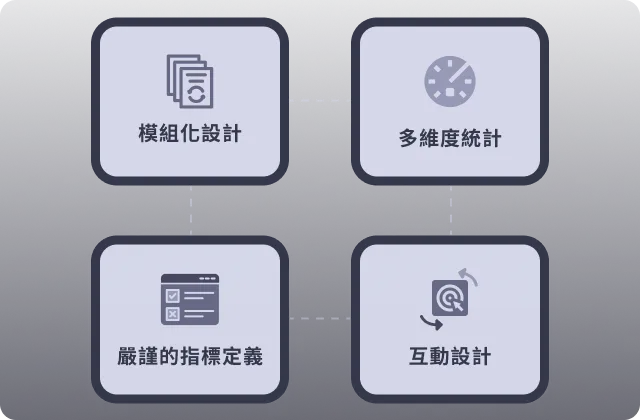
Classes, instructors, branches, and statistics functions were modularized and separated. This design not only improved current maintenance efficiency but also provided high flexibility for the brand to add new service types or expand locations in the future.
Managers can quickly switch perspectives by 'instructor,' 'branch,' or 'class' to grasp key operational metrics at a glance, enabling rapid comparison of performance differences across branches.
Clear calculation rule documentation was built into the system, reducing internal communication costs and improving data credibility in decision-making meetings.
The system goes beyond data display to emphasize 'comparison' and 'trends.' Through chart-based visualization, managers can quickly determine resource allocation priorities.
Tech stack
The project employed a full technology stack to ensure three-end data synchronization and performance:
01
Provides the most stable mobile experience for students and instructors. iOS uses Swift and Android uses Kotlin for native development, fully leveraging mobile device performance.
02
Built a cross-device consistent and intuitive management backend. Using Vue.js to build a Single Page Application (SPA) for smooth page transitions and real-time data presentation, helping managers handle complex scheduling and operations with ease.
03
Built a high-concurrency and high-security data core. Using PHP as the core development language, focused on handling massive student data flows, and performed precise calculations for high-frequency 'reservation deduction' logic to ensure financial and course data accuracy.
Impact
Automated statistics replaced the previously complex manual reconciliation and report creation, allowing the administrative team to focus on member services.
Through quantitative analysis of attendance rates and popularity, the brand can precisely eliminate inefficient classes and increase peak-time allocations, significantly improving space utilization.
After years of version iterations and scale expansions, the system architecture remains robust, becoming the most core digital asset in the client brand's growth journey.
We'll work alongside you to bring your vision to life—let us help clarify your requirements!